top.legal
Designing a contracting platform and experience for sales & legal teams (B2B Saas)
Role: Product Designer ∙ Interaction Designer
Client: top.legal - B2B SaaS
Timeline: 2022
Context
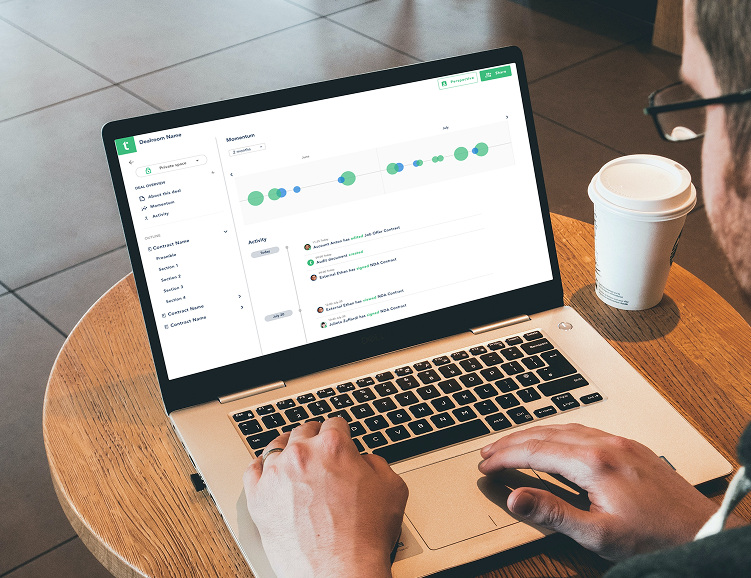
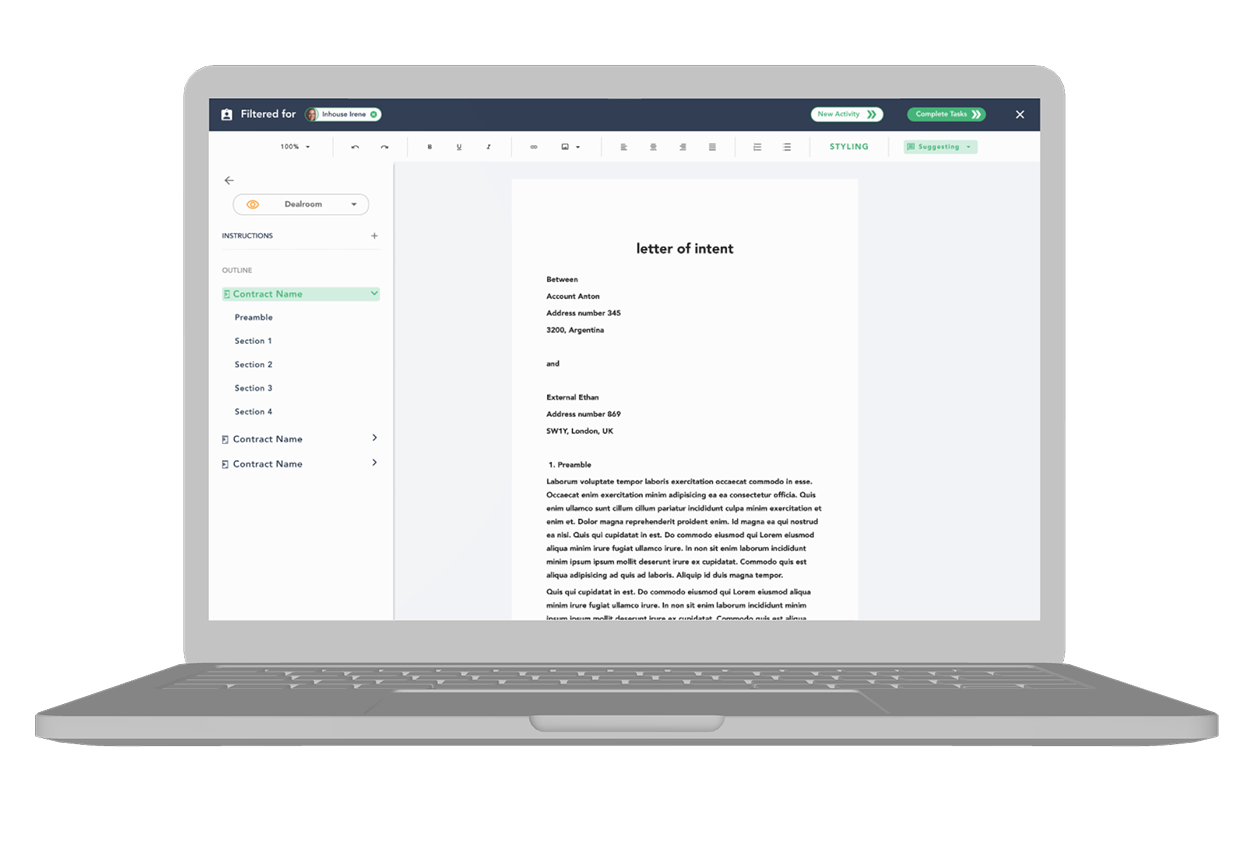
top.legal is B2B SaaS platform designed to help legal teams manage documents, processes and collaboration more efficiently.
The product operates in a highly regulated, detail-heavy domain where clarity, trust, and accuracy are critical.
Usability challenges:
Core workflows were difficult to understand for new users.
Interfaces prioritized functionality over clarity.
Complex terminology increased cognitive load.
Small UX issues compounded into slower onboarding and task completion.
This meant: loss of deal momentum, slower negotiations, lower conversion and reduced revenue opportunities.
Opportunity
The opportunity was to improve the core product experience by reducing friction in critical workflows while preserving the depth and flexibility required by legal teams.
I worked on this product with a strong UX focus, aiming to:
Simplify complex flows without oversimplifying legal concepts.
Support users in moving deals forward with confidence.
Reduce cognitive load through clearer structure and interaction patterns.
The goal was to make the product easier to learn, faster to use, and more intuitive for everyday legal work.
Approach
I structured the work around user research and iterative refinement, staying grounded in real behavior and feedback.
1. Discovery & Research
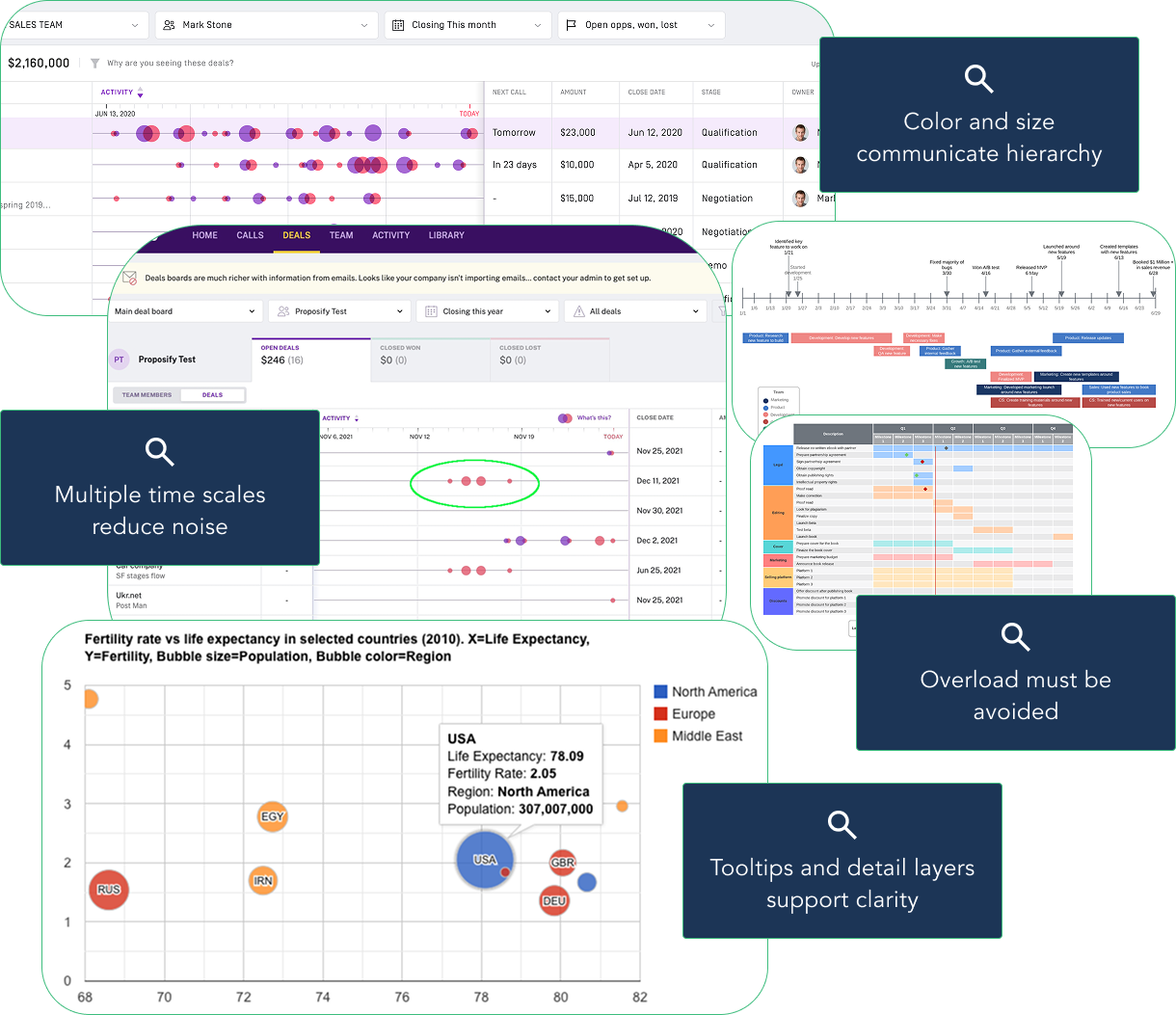
I engaged with sales and legal users to understand how they navigate deals, the questions they needed answered quickly, and the tools and mental models they use.
This included stakeholder sessions, workflow mapping and analysis, tooling audits, and benchmarking best practices.
Goal: gather best practices to understand how deals are actually tracked, reviewed, and advanced today.
2. Define core solution
Research surfaced a central need for real-time visibility into deal activity.
I explored concepts emphasizing a clear, chronological view of actions and statuses across all parties to help users understand momentum and identify blockers. Early concepts were shaped and refined through testing and feedback.
3. Map core workflows
I mapped primary user journeys to identify points of slowdown, error, or uncertainty. This helped distinguish complexity rooted in domain needs from complexity caused by design, leading to more intentional restructuring.

4. Design & Iteration
I collaborated closely with product and engineering to iterate on flows, hierarchy, and interaction patterns, balancing usability, flexibility, and technical constraints.
Feedback loops ensured designs supported a variety of user expertise levels and real work contexts.
Across all stages, the principle was to support complex decision-making without overwhelming users, enabling clarity and momentum in a high-stakes environment.
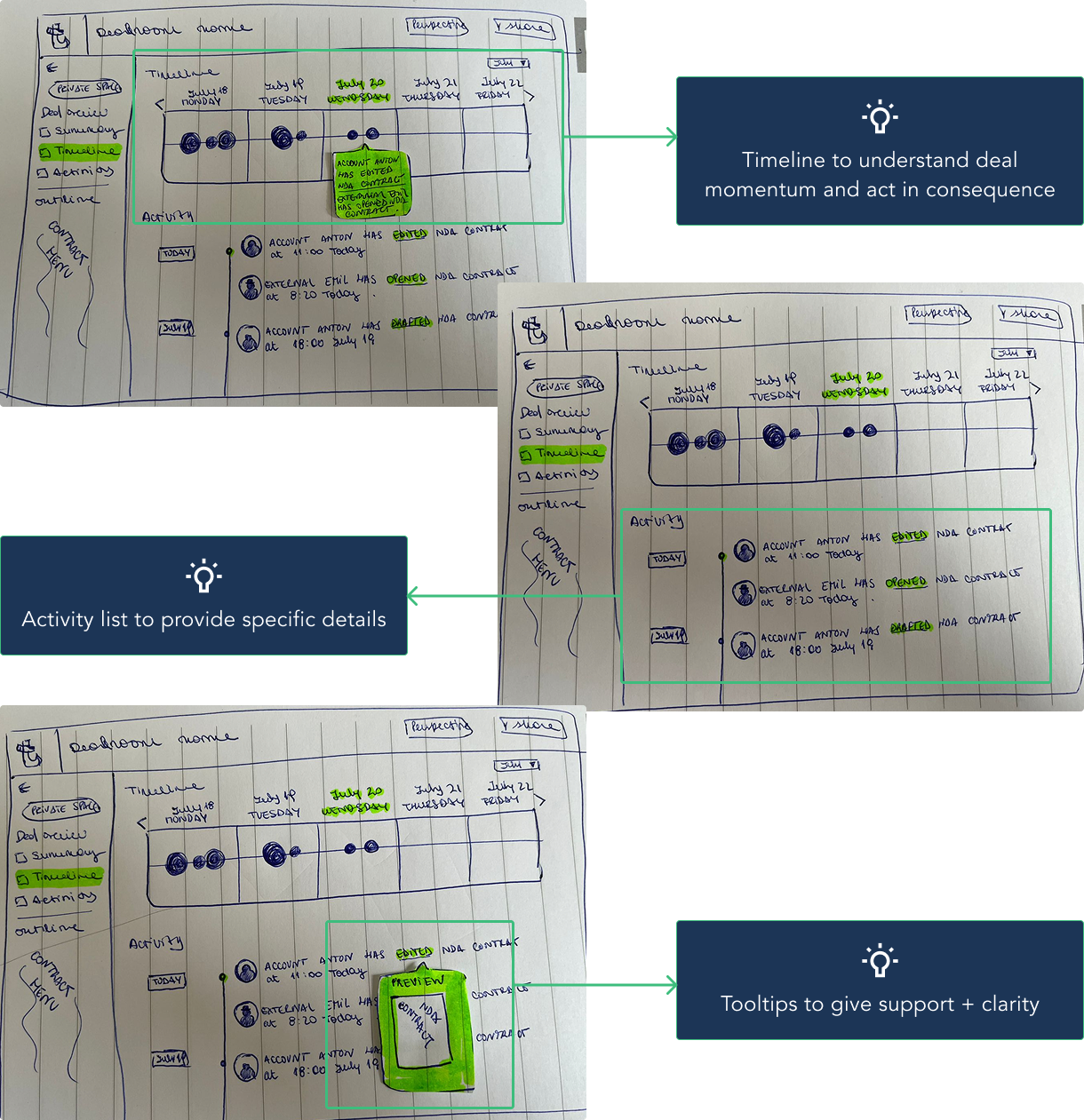
Prioritize real-time decisions
Gave users a chronological, unified view of deal activity to reduce uncertainty and support faster decisions.
Key decisions
Align functionality with user needs
Organized interfaces around core tasks and questions users have during deal progression.
Balance clarity with flexibility
Simplified interfaces where possible, while preserving powerful functionality needed by experienced legal users.
Validate early and often
Iterated with users and stakeholders to refine patterns, behaviors, catch edge cases quickly, and reduce rework.
Outcome
The redesigned product experience improved visibility into deal status, ownership, and next steps, helping sales and legal teams move deals forward with greater confidence.
Grounded in continuous research and iteration, the solution reduced friction in high-pressure workflows and supported faster, more informed decision-making.
This work laid a scalable foundation that balanced UX quality, delivery speed, and evolving business needs.
Learnings
Designing for high-pressure legal and sales contexts reinforced the importance of clarity, trust, and calm decision-making in product experiences.
Partnering closely with executive stakeholders strengthened my ability to navigate strong opinions, align teams around shared goals, and lead through ambiguity while staying grounded in real user needs.