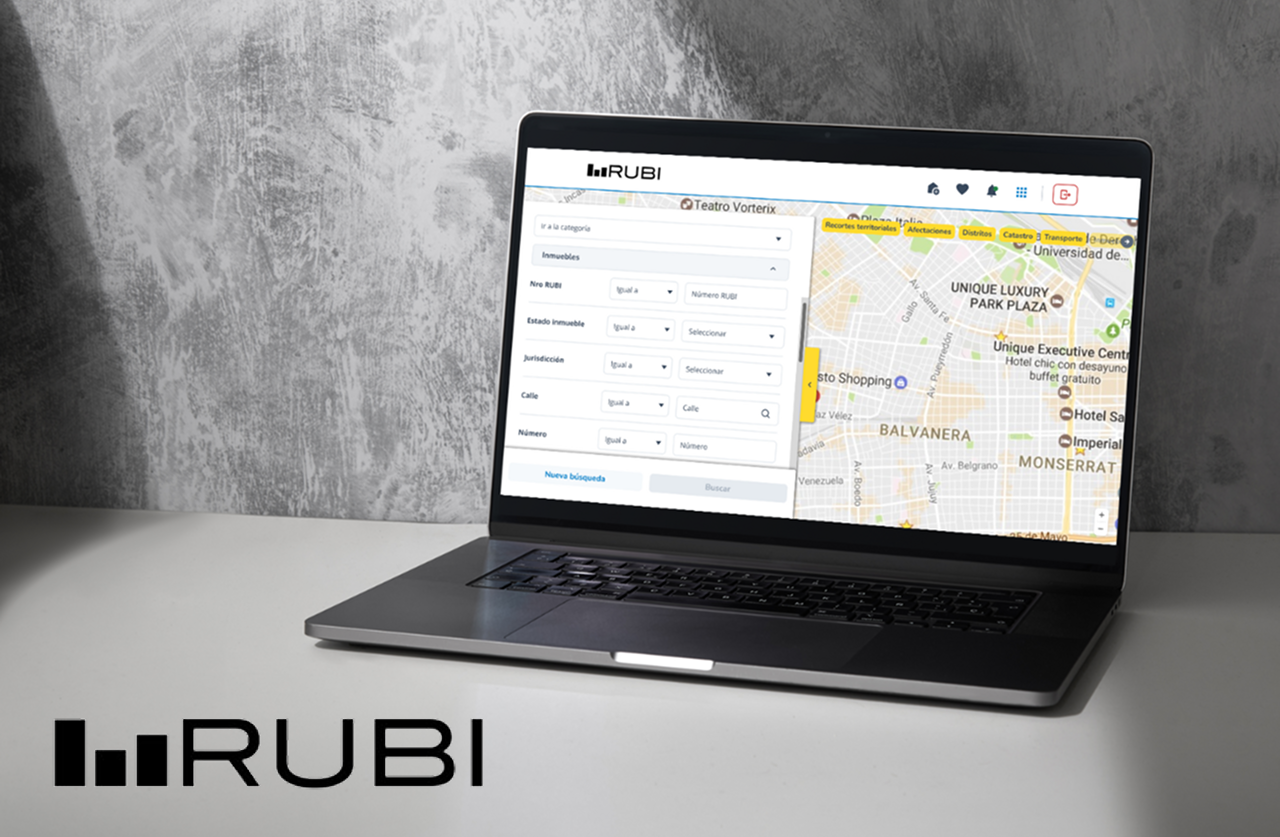
RUBI
Redesigning the City Government’s property management system
Role: Lead Product Designer
Client: Government of the Autonomous City of Buenos Aires
Timeline: Mar-Sep 2023
Context
RUBI is a platform built to manage properties, urban inspections and field operations. The initiative started at an early stage, with an initial concept but no defined experience, flows, or design foundations.
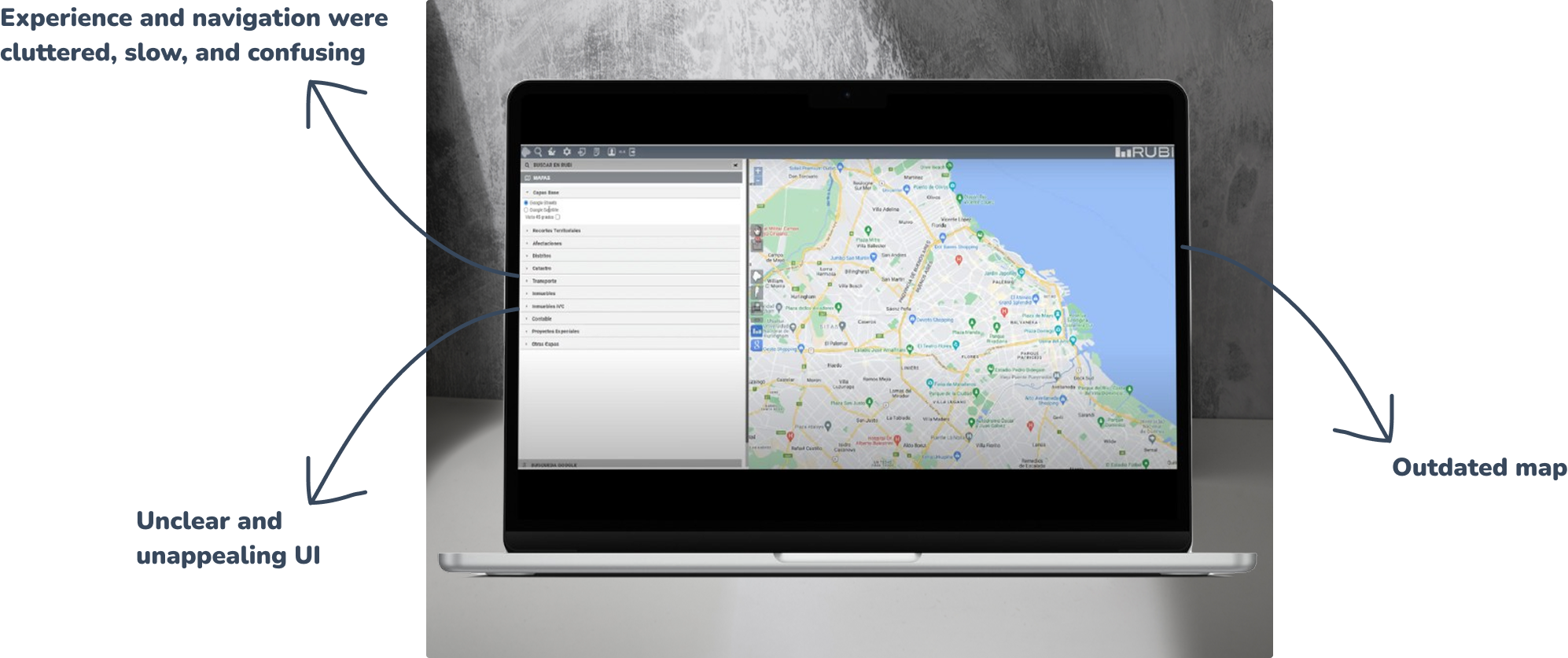
Different tools, inconsistent data, and unclear processes were slowing down operations and creating friction across teams.
The challenge was to evolve a scattered, outdated workflow into a unified digital experience capable of supporting inspectors, managers, and coordinators in real time.
Opportunity
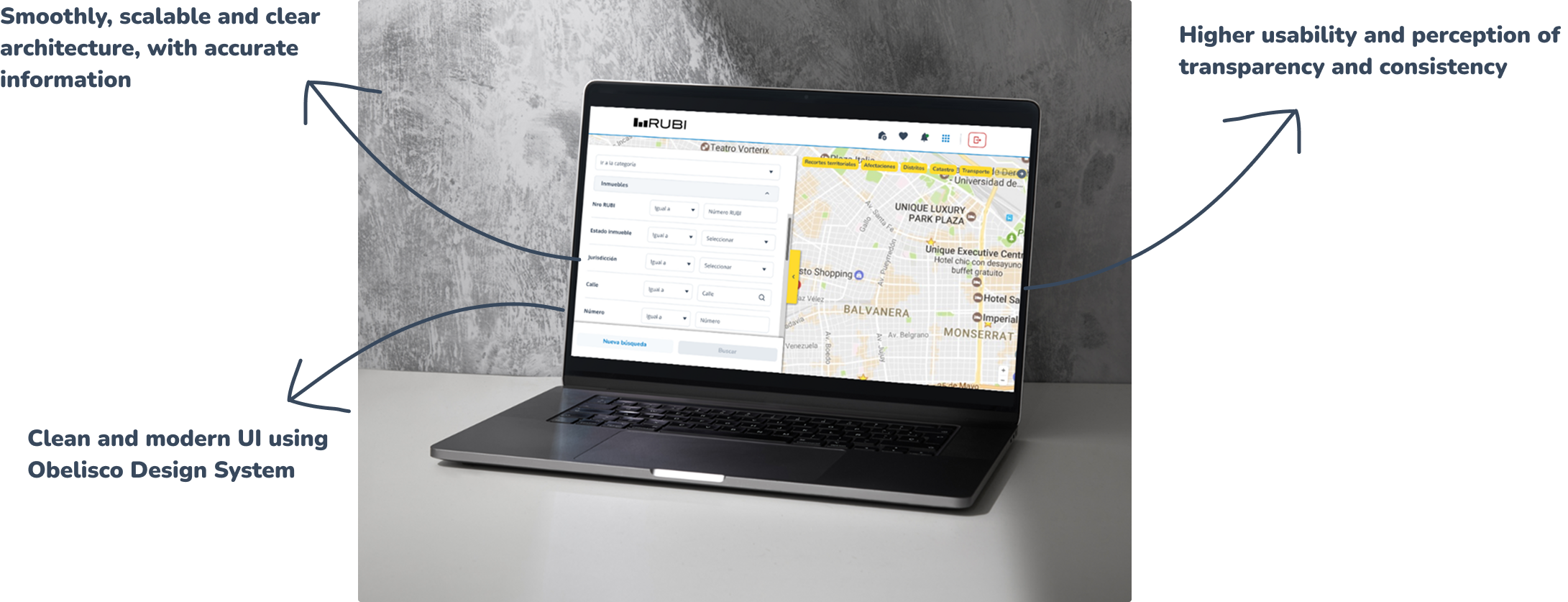
RUBI needed to become a clear, human-centered product experience that balanced emotional resonance with usability, while laying a solid foundation for future iteration.
I led the product design from early exploration through execution, focusing on:
Understanding user needs
Shaping core workflows.
Defining an experience that felt intentional, approachable, and scalable.
Before
After
Approach
I treated RUBI as an end-to-end product design problem, combining research, exploration, and iterative refinement.
-
I explored user motivations, expectations, and pain points to identify what users needed at key moments and how the product could support them without unnecessary complexity.
-
I designed primary user journeys to ensure the experience felt intuitive and easy to navigate, prioritizing clarity, feedback, and progressive disclosure.
-
I established a visual and interaction direction based on Obelisco (Government’s Design System) that reinforced trust and coherence, aligning design decisions with the product’s emotional and functional goals.
-
Through continuous iteration, I refined flows, hierarchy, and interaction patterns to improve usability and consistency across the experience.
Key decisions
→ Design for clarity
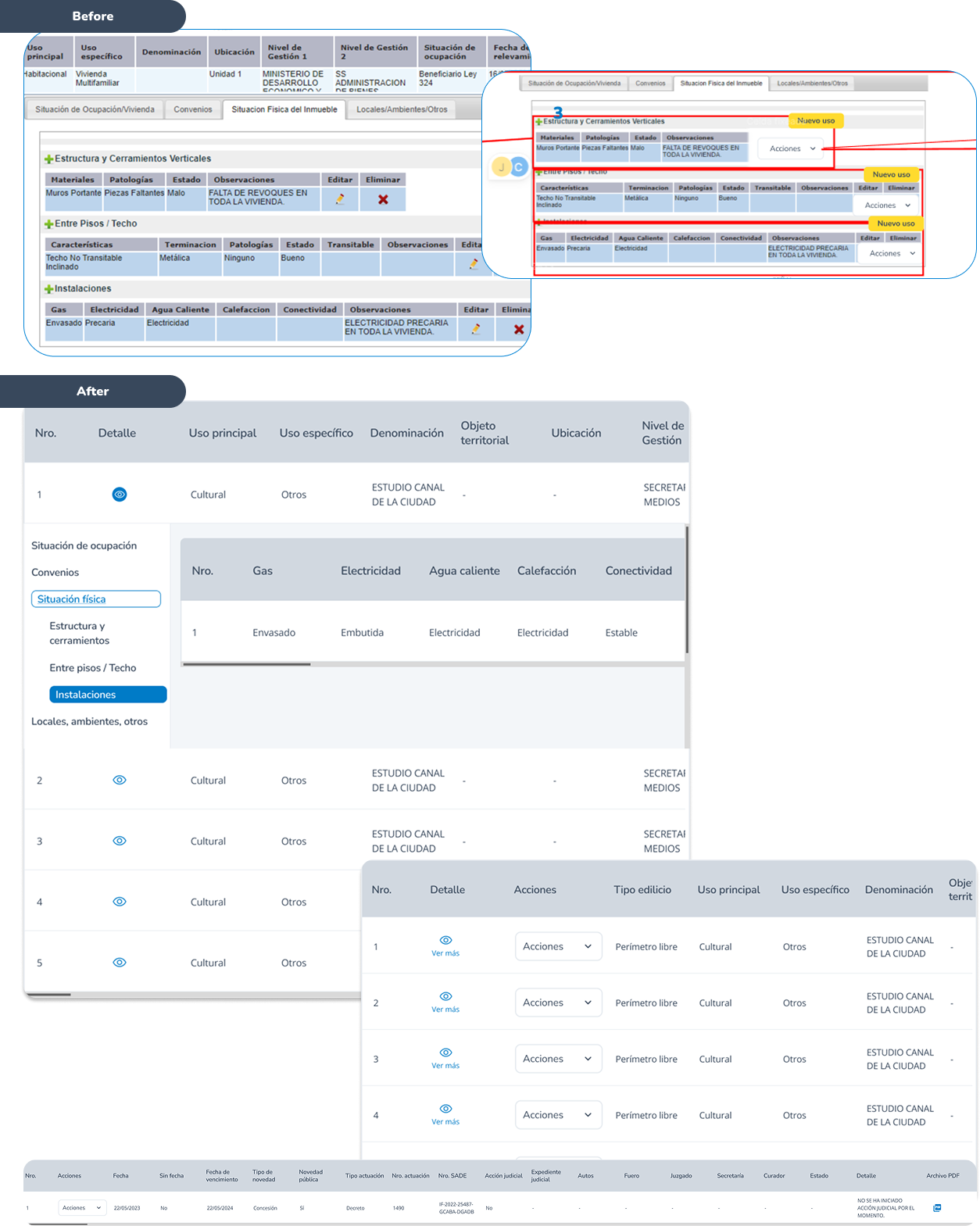
Prioritized clear, approachable interactions, guided flows for planning, executing, tracking and reporting inspections, that reduced users’ friction and cognitive load.
→ Keep workflows focused and intentional
Removed unnecessary or duplicated steps to help users move forward confidently, improving speed and quality work.
→ Build flexible foundations early
Established reusable UX patterns with intuitive behaviors that could support future feature growth and adoption.
Outcome
The redesign enabled RUBI to scale operationally and digitally:
Increased clarity and efficiency for inspectors and coordinators
Faster onboarding thanks to consistent UI and flows
Reduced errors by aligning screens with the real inspection process
Greater visibility across inspections, performance, and field status
A scalable foundation for future features and continuous growth
Most importantly, I added value by bridging operational complexity and product design: translating stakeholder vision, business strategy, and real-world constraints into a clean, usable, future-ready product.
Learnings
Designing RUBI reinforced the importance of empathy, restraint, and clarity in product experiences.
Working from early-stage ambiguity strengthened my ability to translate abstract ideas into concrete design decisions while balancing usability, emotion, and scalability.
I believe that adversity breeds creativity, and creativity breeds innovation.