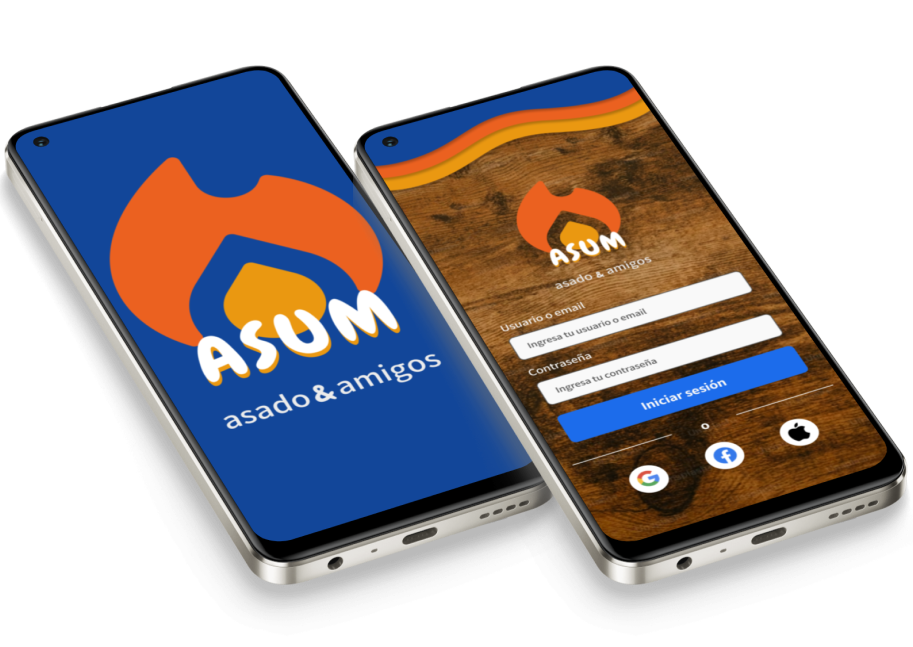
ASUM
Designing a shared coordination for social gatherings digital experience
Role: Product Designer
Type: IT Patagonia Design Hackathon
Timeline: 3 days (Dec 11-13, 2023)
Context
ASUM was a 3-day product design challenge focused on creating a tool to help groups organize “asados,” a deeply social and culturally significant gathering in Argentina.
Conversations about planning typically happen across fragmented chats, memories, and informal agreements, making coordination difficult and error-prone.
The goal was to design a solution that helped groups define roles, assign responsibilities, manage supplies, and keep everyone aligned—without creating unnecessary friction in a traditionally informal experience.
Opportunity
Organizing a friends gathering is not that simple. I aimed to transform a common, chaotic planning experience into a clear, shared coordination tool that felt culturally familiar and intuitive.
In just 72 hours, I was responsible for:
Understanding social context and human behaviors.
Creating UX structure and interactions that supported group planning.
Designing a visual identity and UI system aligned with the experience.
Delivering a cohesive design vision from concept to high fidelity.
This accelerated setting demanded focus on core impact.
Approach
I crafted ASUM as a human-centered, rapid product challenge, grounding decisions in real behaviors and cultural understanding.
1. Understand the social context
Research shows that 93.7% of Argentines consider asado their national dish, and the majority gather regularly - even with a 40% increase in meat prices.

After, I mapped the real dynamics of organizing an asado: who usually leads the event, how roles are decided (host, grill, guests), what information people actually need, etc.
This helped me design around existing behaviors, not impose artificial workflows.
2. Core structure & UX strategy
The experience was designed to be easy to understand at a glance, minimizing friction and reducing back-and-forth communication.
Key features focused on:

Clear event creation

Price comparison
Defined participant roles
Centralized event details



Shared task lists

Expense tracking
3. Visual identity & UI System
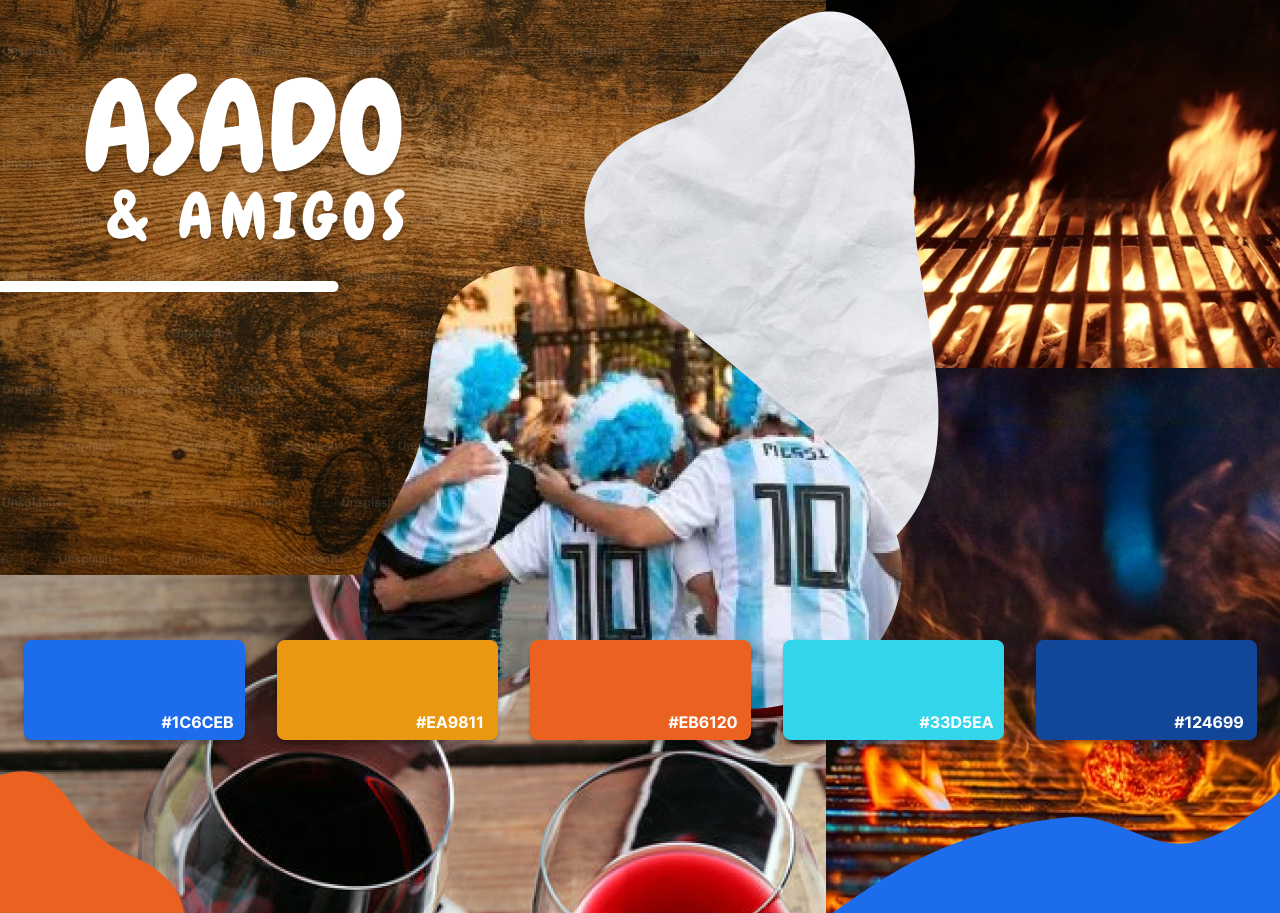
I built a strong visual language inspired by:
Fire, warmth and gathering - culturally resonant.
Bold shapes and colors to reflect energy and community.
Clear hierarchy to support fast scanning and coordination.
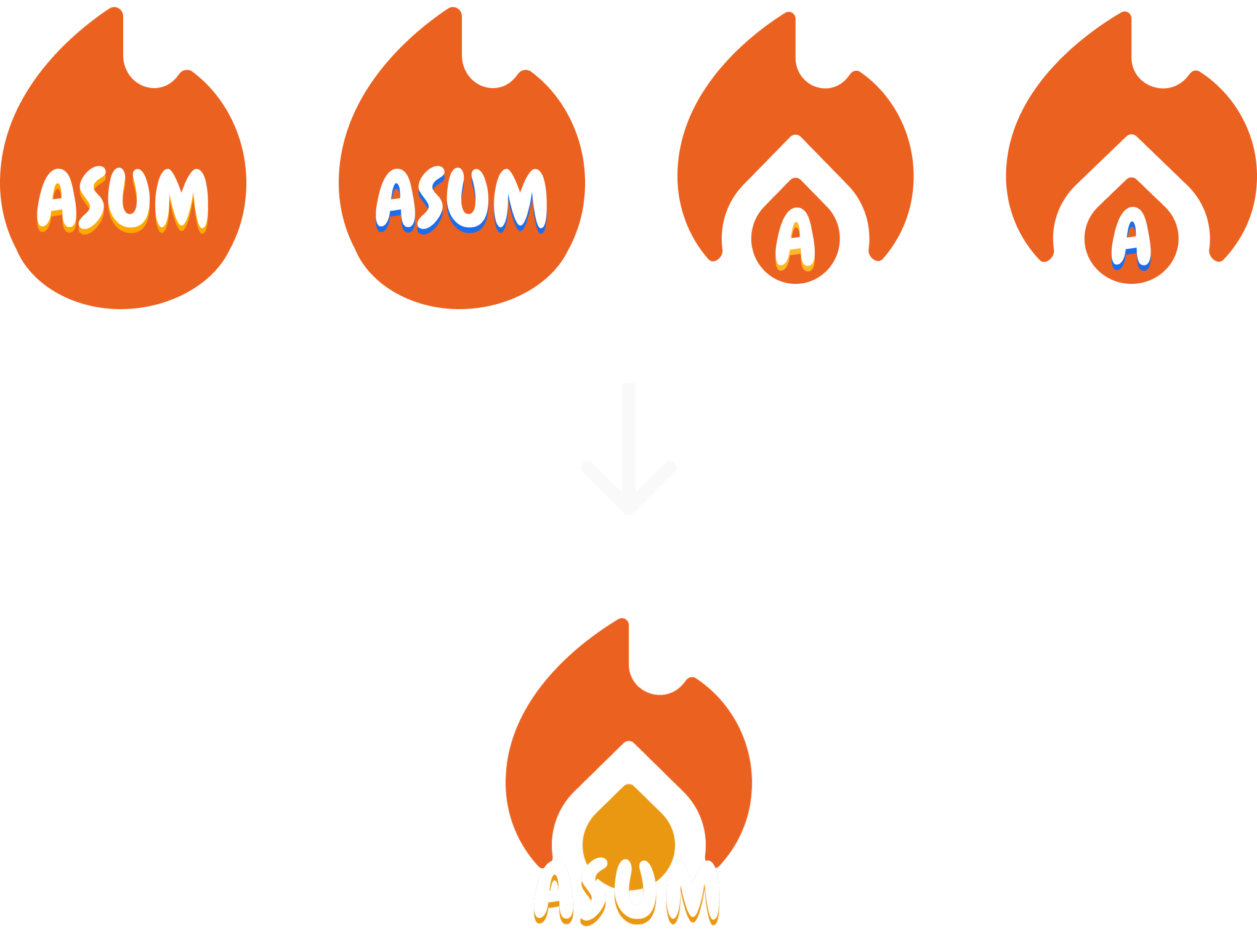
Using a consistent component system, I ensured the UI remained scalable and readable across flows while maintaining a distinctive identity.
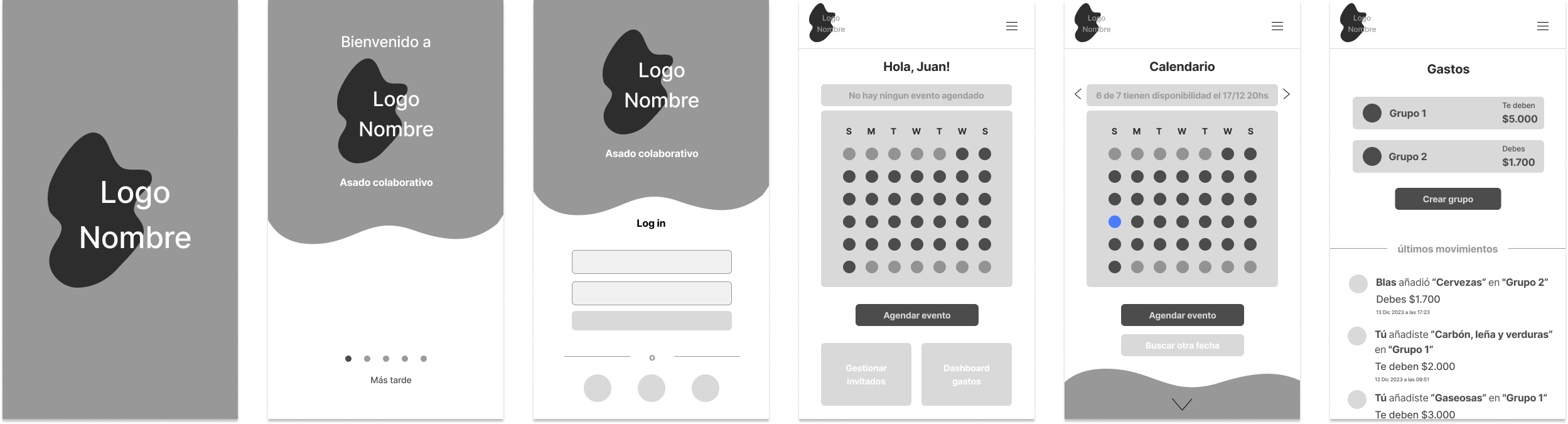
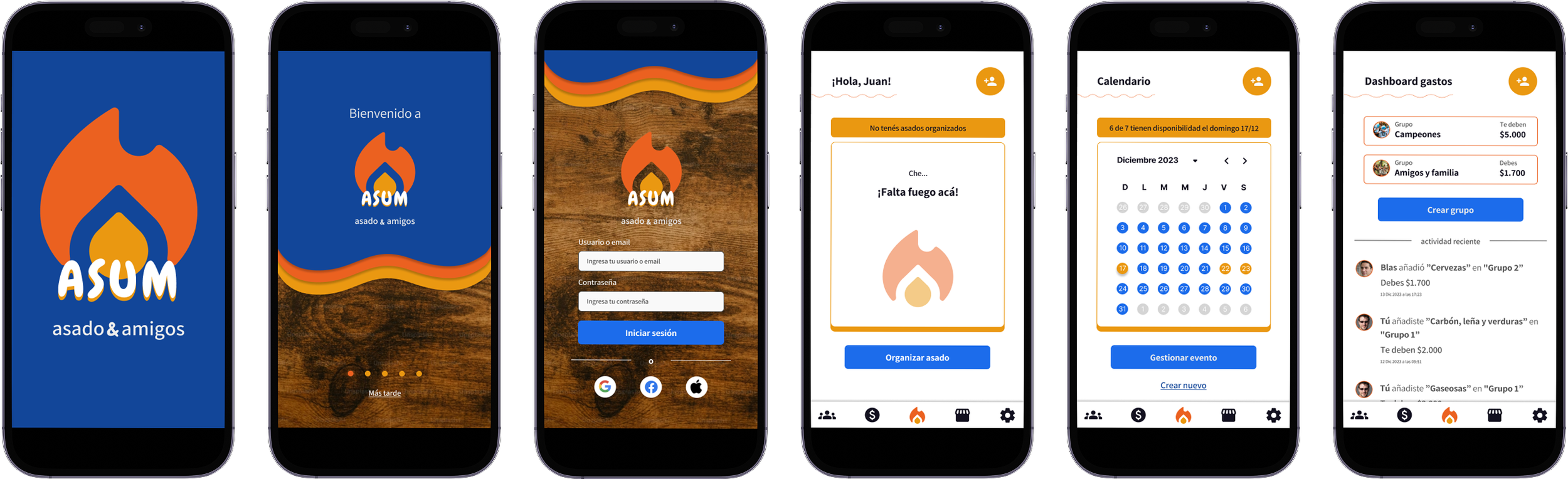
4. Wireframes & High fidelity design
I translated the structure into wireframes and a high-fidelity prototype, focusing on clear task ownership, visual feedback for status and completion, consistent navigation patterns, strong contrast and legibility.
The UI supports collaboration without becoming visually overwhelming.
Key decisions
Design for cultural context
Ensured the tool supported informal social coordination without over-structuring the experience.Prioritize core planning needs
Focused on roles, tasks, and shared visibility rather than feature breadth.Balance playfulness and clarity
Visual language reinforced energy and community while maintaining usability and readability.
Outcome
In a short timeframe, ASUM demonstrated an intuitive way to structure complex social coordination into a shared tool.
The experience aligned with real human behavior, balanced flexibility and structure (preserving the social nature of asados), and delivered a cohesive product vision from concept to high-fidelity UI.
Learnings
This project showcases my ability to turn a traditionally messy process into a clear, shared experience, and reflects my approach to product design: human-centered, system-driven, and visually intentional.
Designing within tight time constraints sharpened my ability to prioritize what truly matters to users, balance cultural nuance with usability, and deliver clear product decisions under pressure.